Since 2020, the Province of North Holland and the Beens–Hakkers contractor consortium have been working together intensively on the construction of nature-friendly banks along North Holland canals.
Within this multi-year cooperation agreement (SOK), we approach sustainability not as a project goal, but as a structural improvement of the living environment.
The construction team continuously seeks smarter and socially responsible ways of working, with maximum reuse of materials and optimal use of zero-emission equipment.
By now, seven projects have already been successfully completed, including the bank replacement along the Noordhollandsch Kanaal near Den Helder.
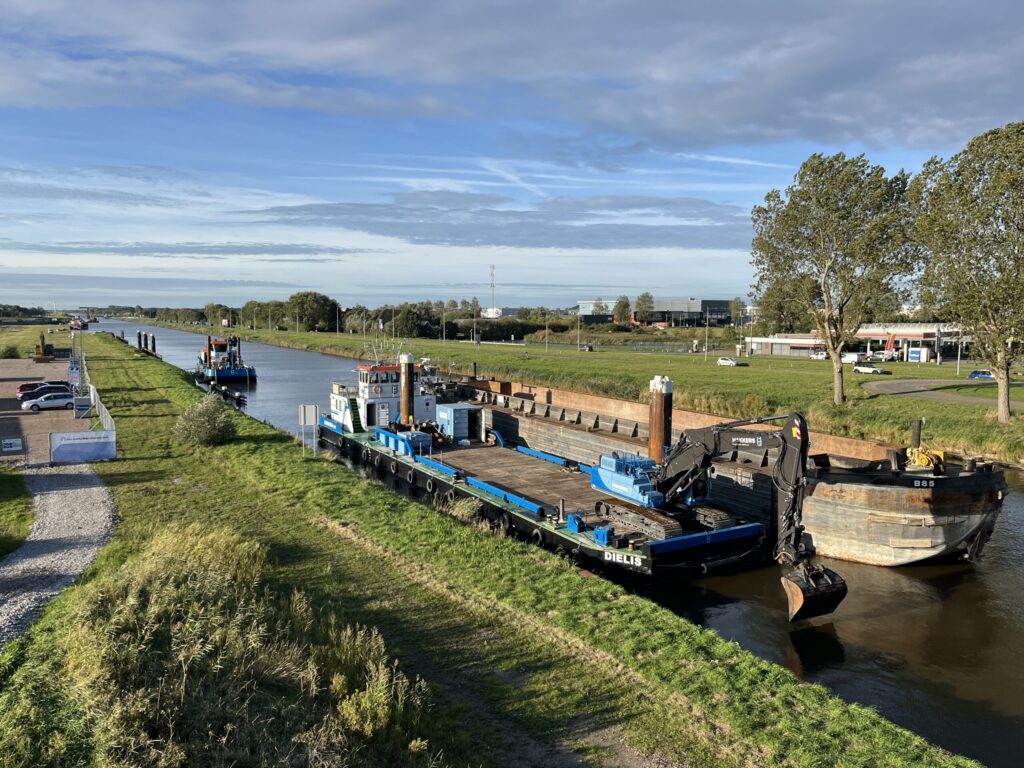
This project, the bank replacement between the Kooyhaven and the lock at the Oostoeverweg, clearly went beyond replacing outdated banks.
Maarten Vos, Technical Manager on behalf of Beens-Hakkers, explains: “The project called for an integrated approach in which circularity, emission reduction, biodiversity, and social return on investment come together.”
Circularity was central to virtually every design and execution choice.
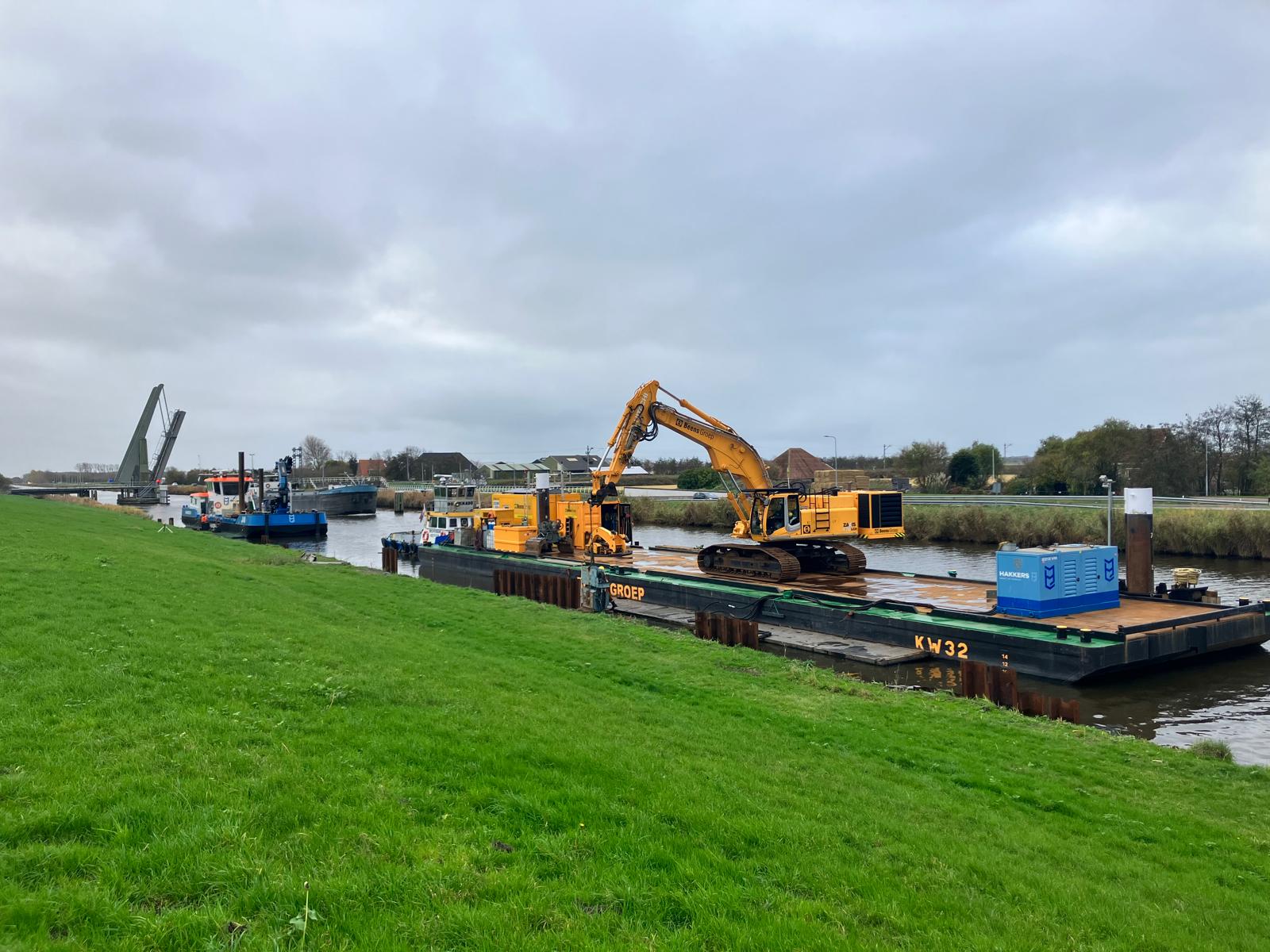
More than half of the 660 meters of installed steel sheet piles came from the Twente Canals and were given a second life near Den Helder.
Wood and concrete released from other projects within the province were also reused.
By reusing existing materials, we were able to limit the demand for new raw materials and thus drastically reduce the environmental impact.
Sustainable acceleration
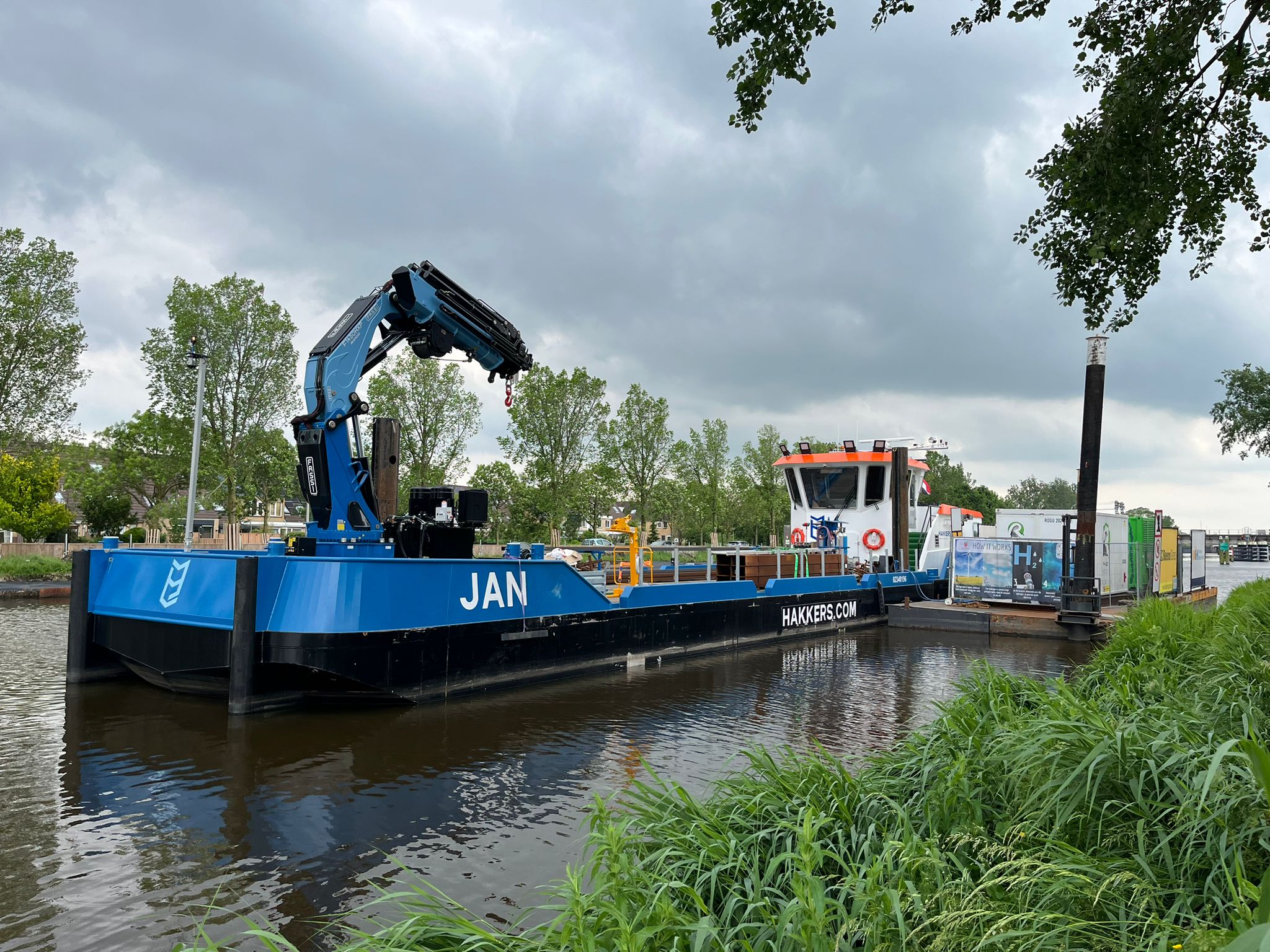
“We have also made significant strides in the area of emission-free operations. For the work around the Kooyhaven, we used our Ms Jan, an electrically powered work vessel equipped with an electric crane. For this project, we were able to utilize shore power in the port. However, as a consortium of contractors, we are also investing in alternative energy sources, such as floating hydrogen charging stations. It is precisely a long-term partnership that makes these types of investments possible, because innovations do not need to pay for themselves within a single project. This creates room to truly accelerate the sustainability of the sector,” says Daaf de Rijke, Project Manager at Hakkers.
Circular forward thinking
This circular approach requires a different way of collaborating and thinking ahead.
Vos: “We temporarily store materials that become available in a depot that we have set up and manage together with the province. Thanks to the shared insight into future projects within the SOK, we can consider circular applications as early as the design phase. As a result, reuse becomes not only more sustainable, but also more economically attractive and practically feasible.”
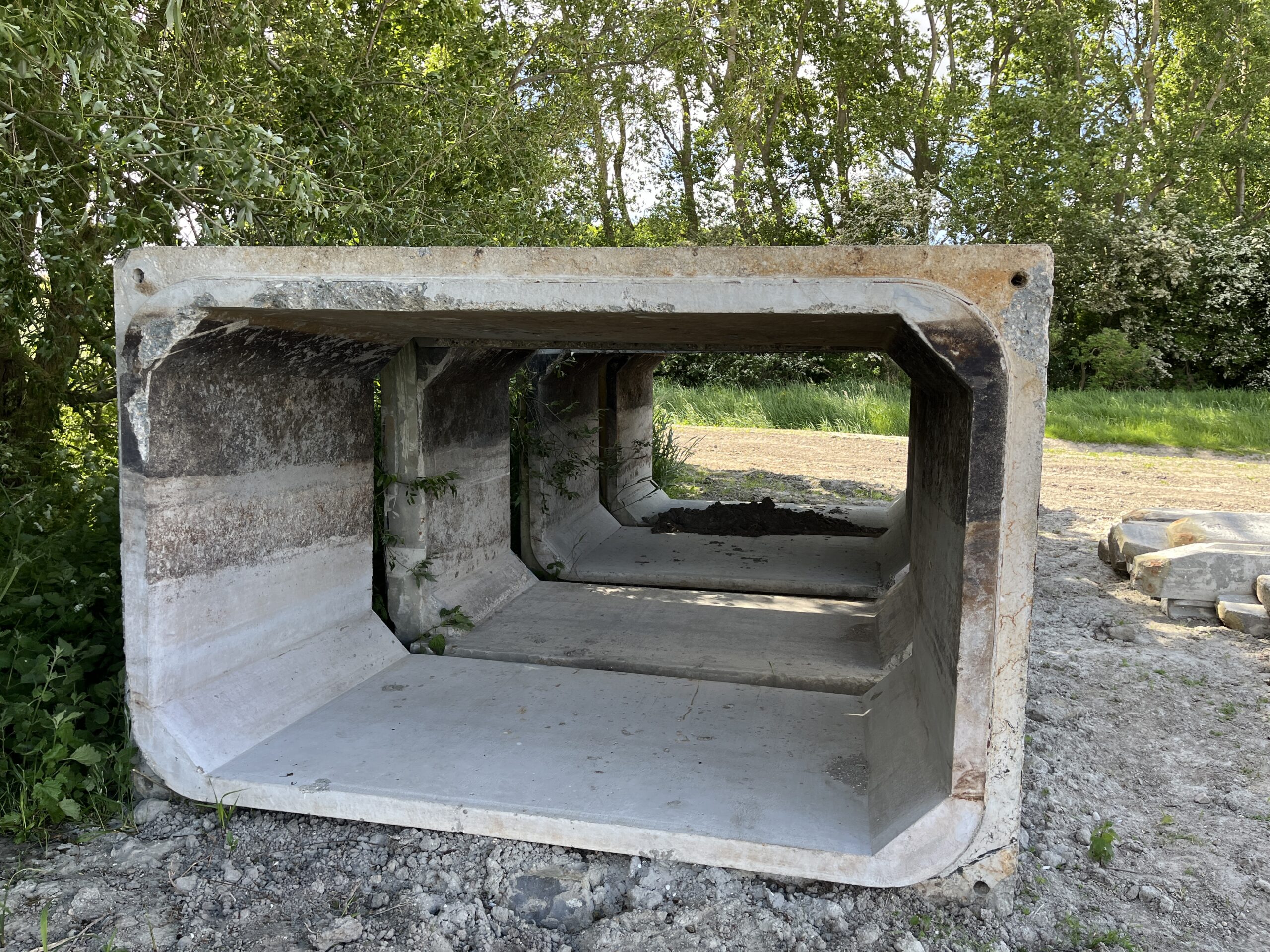
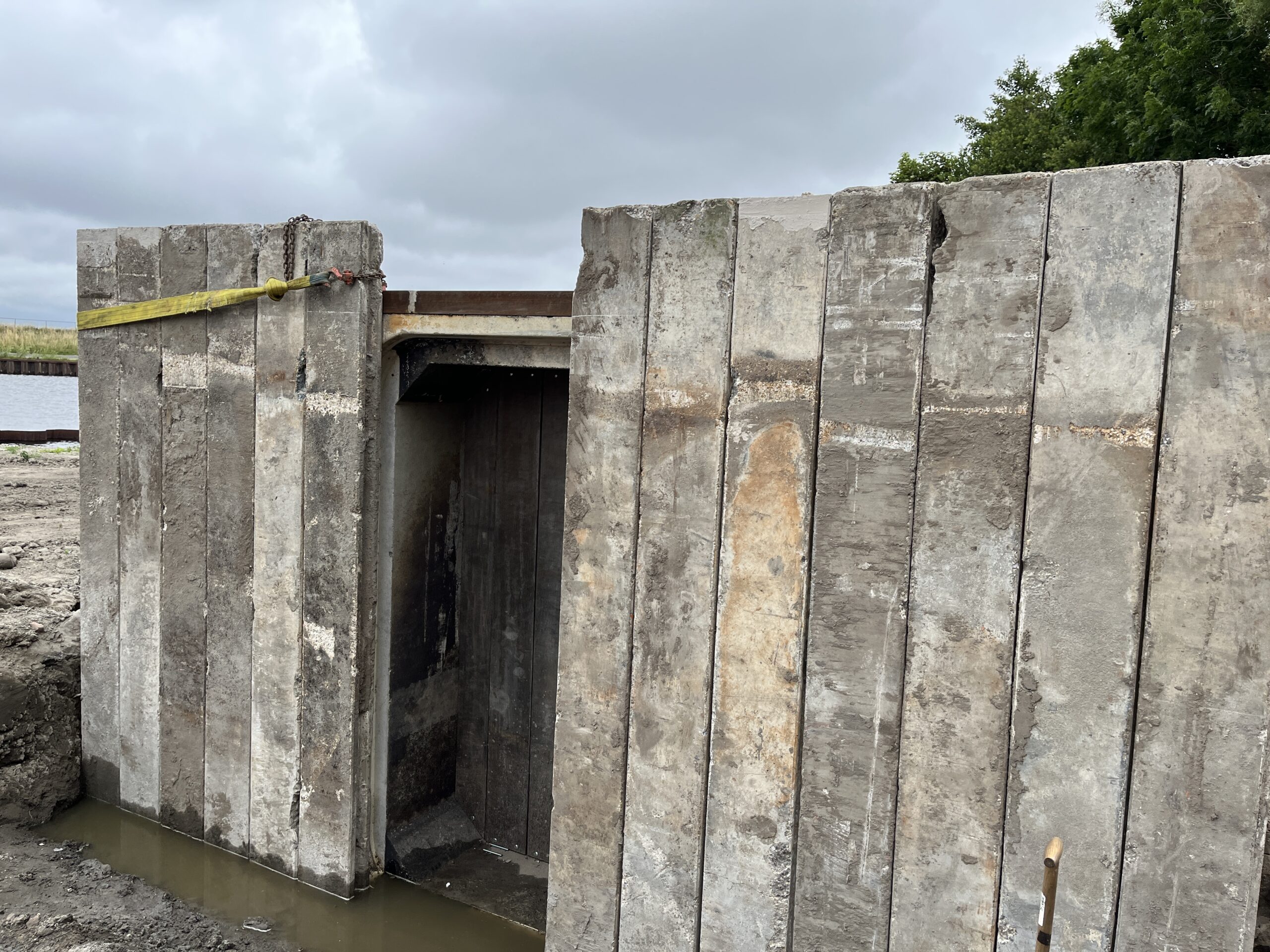
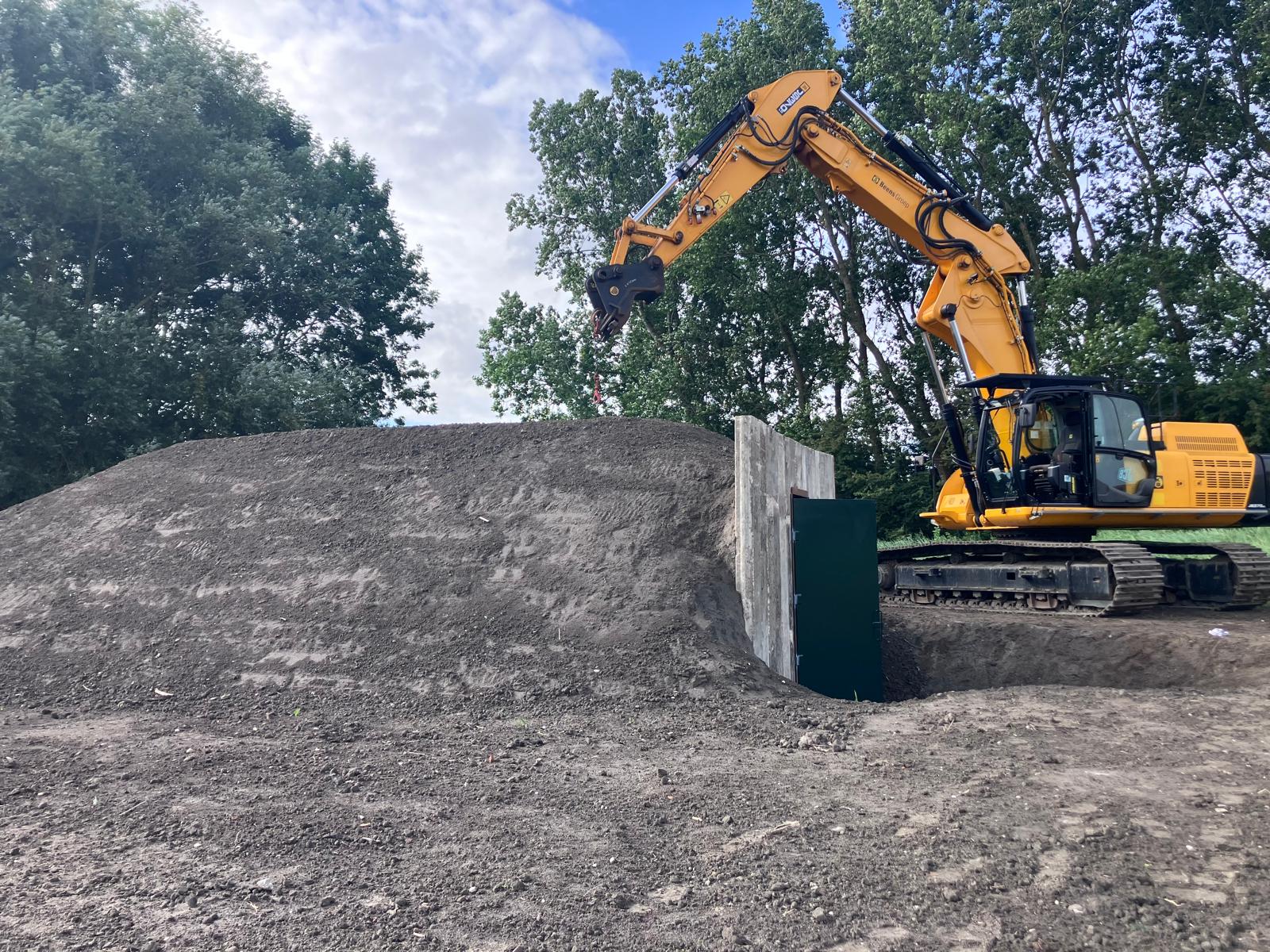
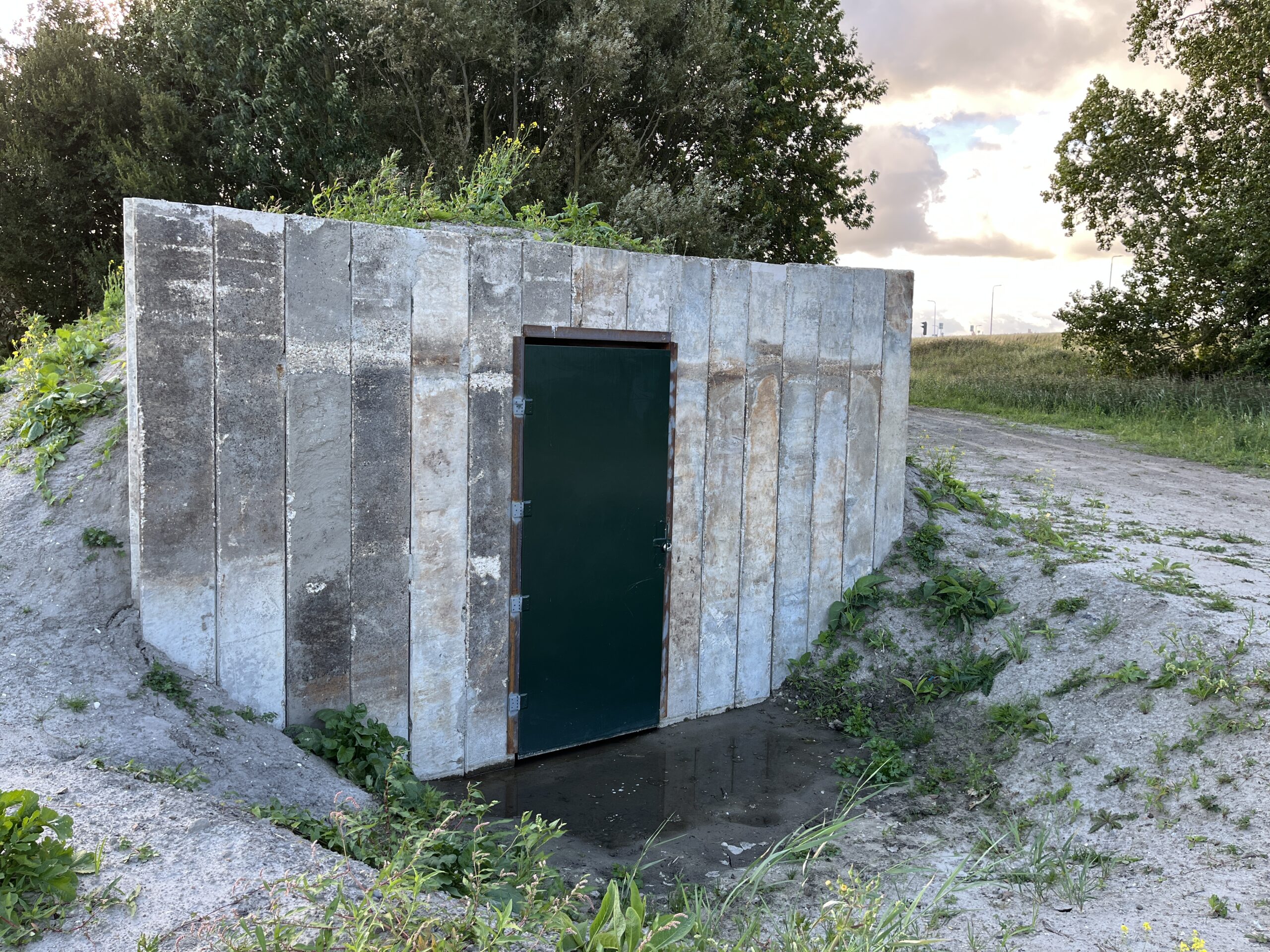
A concrete example of this integrated approach is the bat bunker near the Kooybrug.
This robust shelter is constructed entirely from parts of a salvaged concrete culvert from another project within the province.
Using reclaimed wood, the bunker is divided into various chambers, creating a stable, dark, and humid indoor climate; ideal for hibernating bats such as the Eurasian dark bat.
The bunker shows how residual materials can also be used to make an innovative contribution to biodiversity and nature development.
Flexible executing
De Rijke: “The execution of the project simultaneously presented significant challenges. Parts of the work area proved to be suspect territory due to possible unexploded aircraft bombs from World War II. We therefore had to manually excavate old riverbanks layer by layer, under the guidance of specialists using magnetic probes. This required flexibility and close coordination within the construction team. By adjusting the design at an early stage, we were able to largely compensate for the unforeseen additional costs and keep the project manageable.”
Promoting biodiversity and SROI
In addition to circularity, biodiversity played an important role in the project.
Traditional stone riprap gave way to gentle slopes with natural vegetation.
This creates an attractive habitat for plants, insects, fish, and birds.
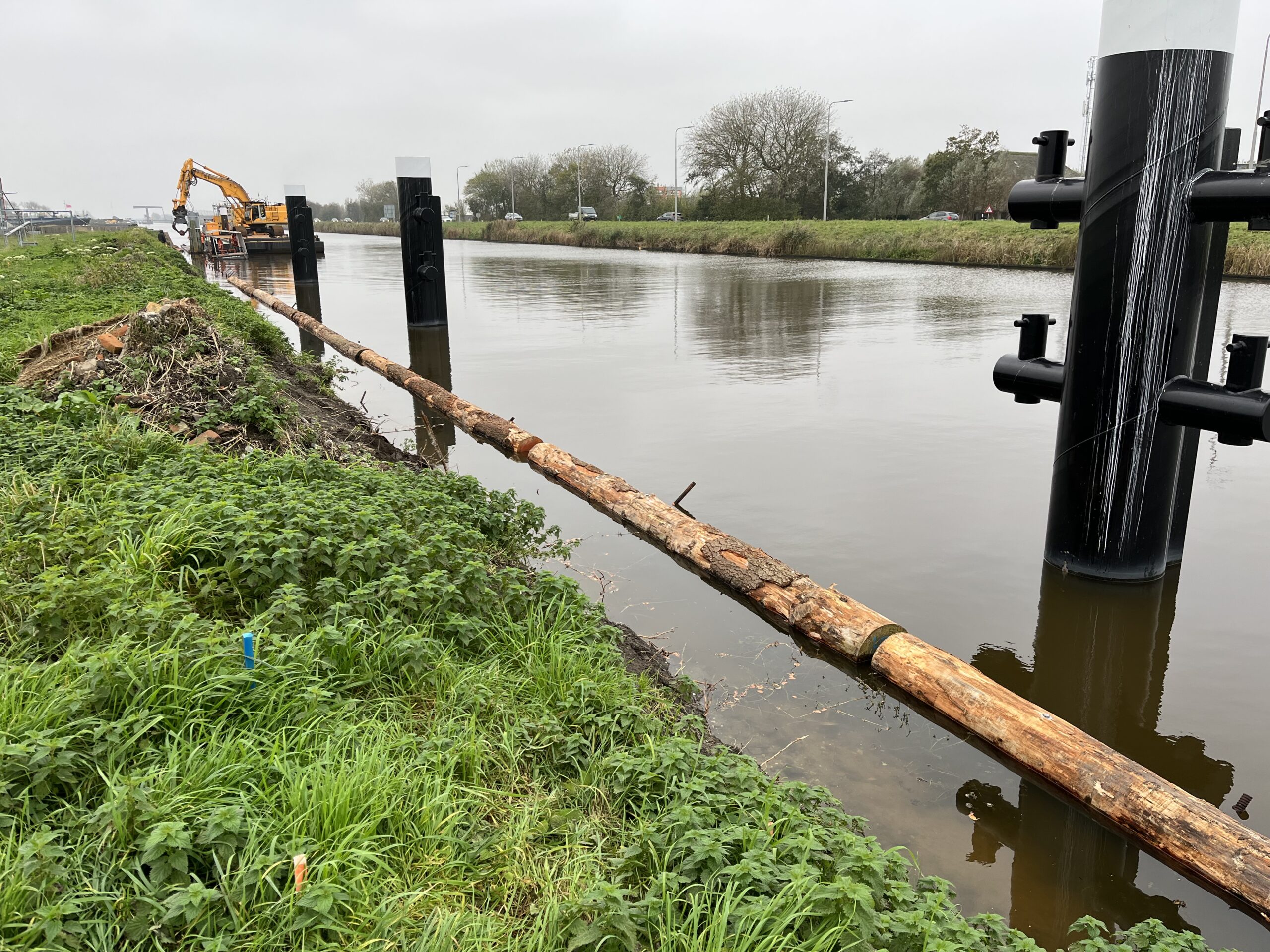
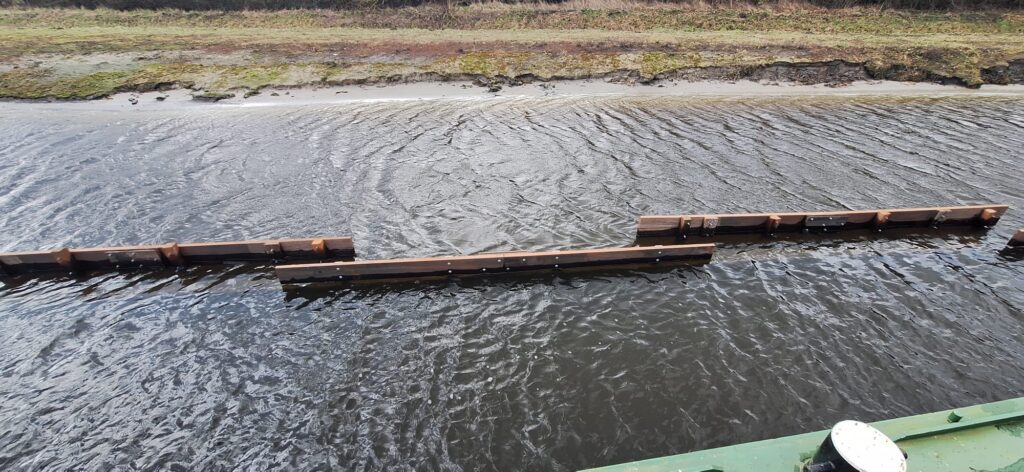
Because young nature-friendly banks are vulnerable to wave action, circular breakwaters made of recycled wood have been installed.
In this way, sustainability and ecology directly reinforce each other in practice.
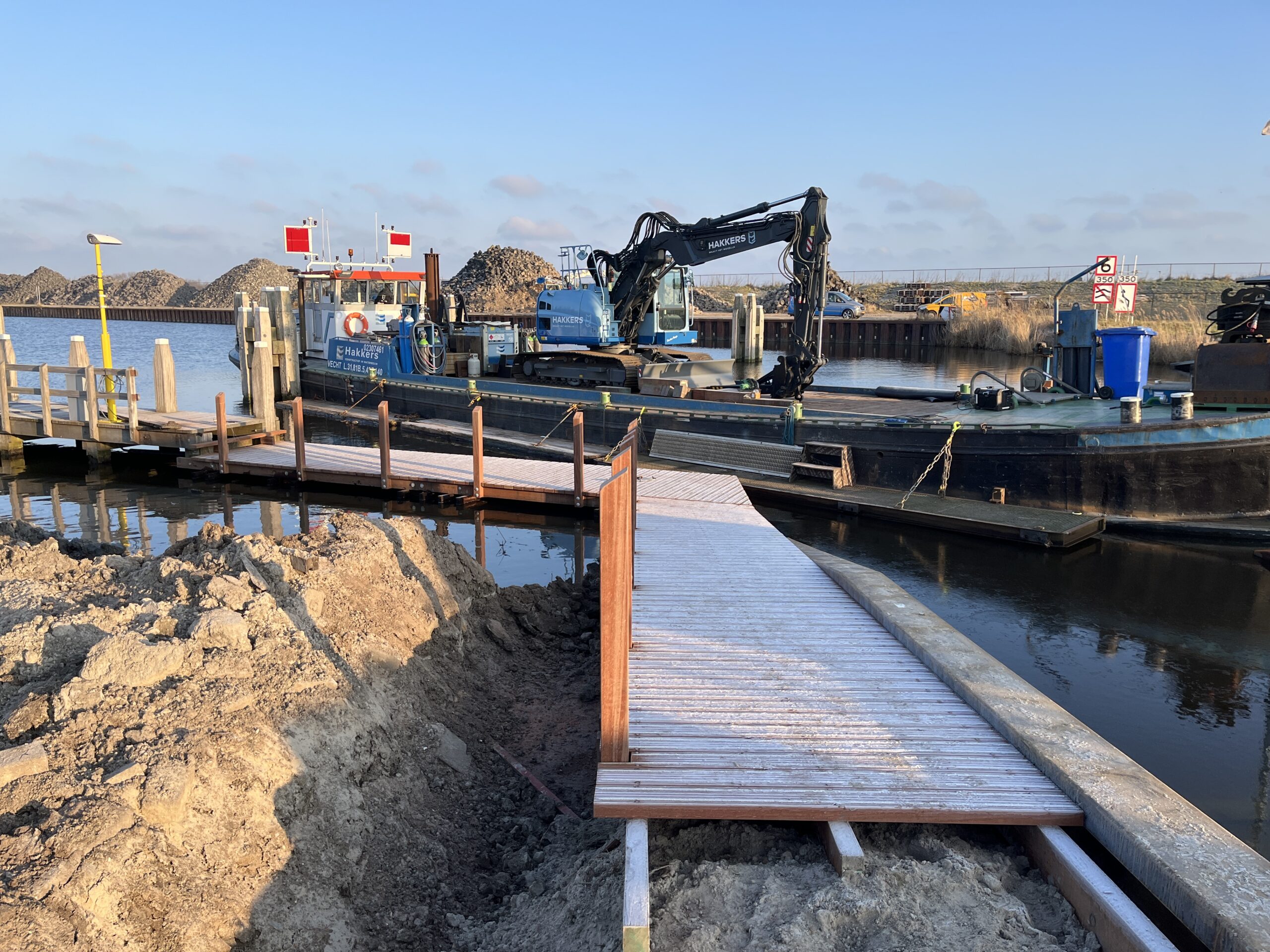
Vos: “The societal added value of the project goes beyond sustainability and ecology alone. Various components of the project, including parts of jetties and a slipway, were produced by people facing barriers to employment. This gives social return on investment a visible and practical implementation within the execution.”
Continuous pursuit of improvement
The original sustainability objectives from the SOK have been significantly exceeded: on average, an 85% reduction in environmental costs was achieved.
The target of 50% material reuse was also significantly exceeded.
In the meantime, the SOK has been extended by two years, with an expected reduction of 95% in environmental costs.
According to Jeroen Braakman, senior project manager at the Province of North Holland, a long-term collaboration leads to results that are difficult to achieve with standalone projects.
By bundling projects into a multi-year agreement, you can make optimal use of released materials.
In addition, you encourage sustainable investments that cannot be recouped in a single project.
By continuously striving for improvement together, we become increasingly efficient and ambitious.
It was precisely that combination of shared ambitions, long-term collaboration, and continuous innovation that made the approach at Kooyhaven special.
Within the construction team, the focus was not on standard solutions or short-term results, but on the shared conviction that this project can contribute to a future-proof living environment.
With the extension of the SOK until 2028, we are continuing to build on that shared ambition together with Beens Groep and Hakkers: with sustainable impact that remains visible to future generations.