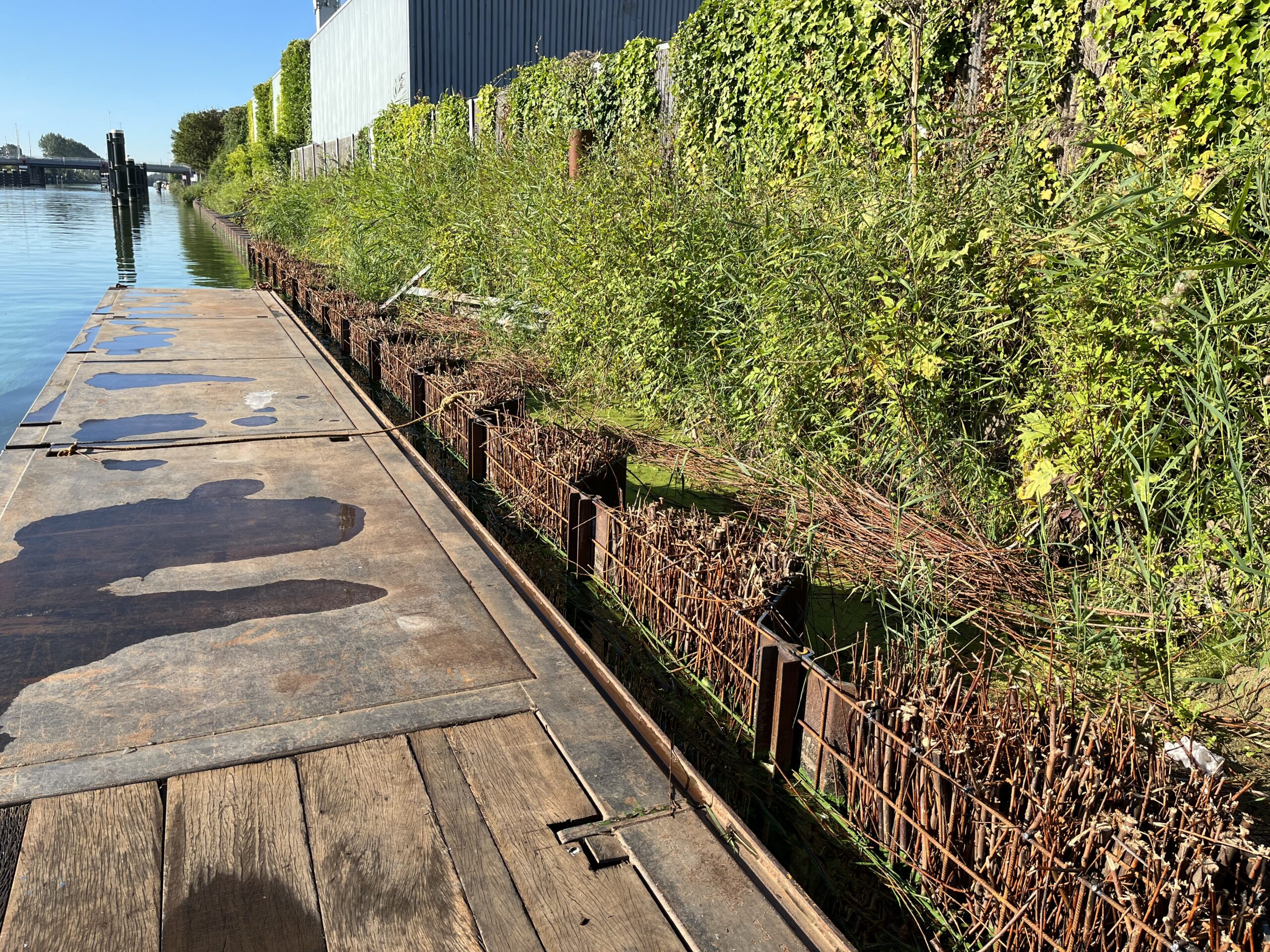
How do you renew riverbanks sustainably and efficiently?
The Province of North Holland, Beens Groep, and Hakkers demonstrate how that works in practice.
Since 2020, we have been working together on replacing banks along more than twenty waterway sections.
The goals were ambitious: 80% lower environmental costs and reusing at least half of the materials.
By now, the results are so convincing that the collaboration has been extended until 2028 – with tightened sustainability goals.
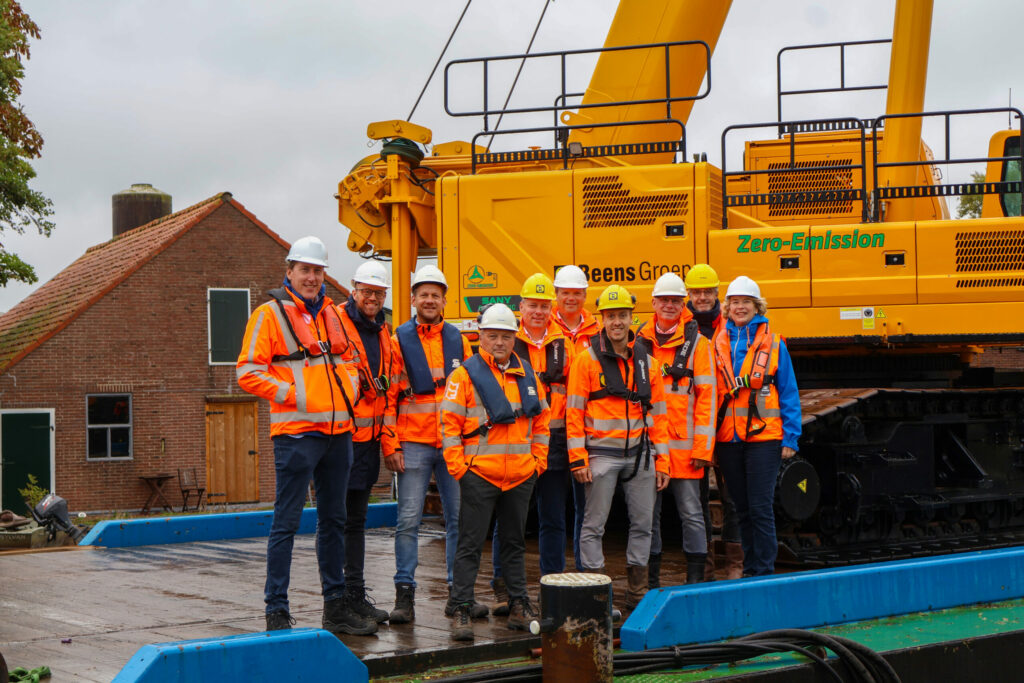
Learning and improving in every trajectory
The strength of this program lies in continuous learning.
After each phase, the partners review what can be improved and immediately incorporate those insights into the next project. “The strength of a programmatic approach with a long-term cooperation agreement is that you can continuously improve,” says Jeroen Braakman, senior project manager at the Province of North Holland.
We derive lessons learned from every waterway section that we can immediately apply to the next one. We challenge each other to go the extra mile in terms of sustainability and efficiency every time. A long-term collaboration provides contractors with stability and comfort. They dare to be more transparent; after all, we use the lessons learned for improvement, not to hold each other accountable.
Through this approach, not only does collaboration grow, but so does ambition.
Moreover, the province is using the learning process to raise its own standards.
We play a driving role within the Sustainable Infrastructure program. This approach demonstrates that sustainable collaboration is efficient and effective. The fact that we are now raising our Environmental Cost Indicator ambition from 80% to 95% is a great example of this.
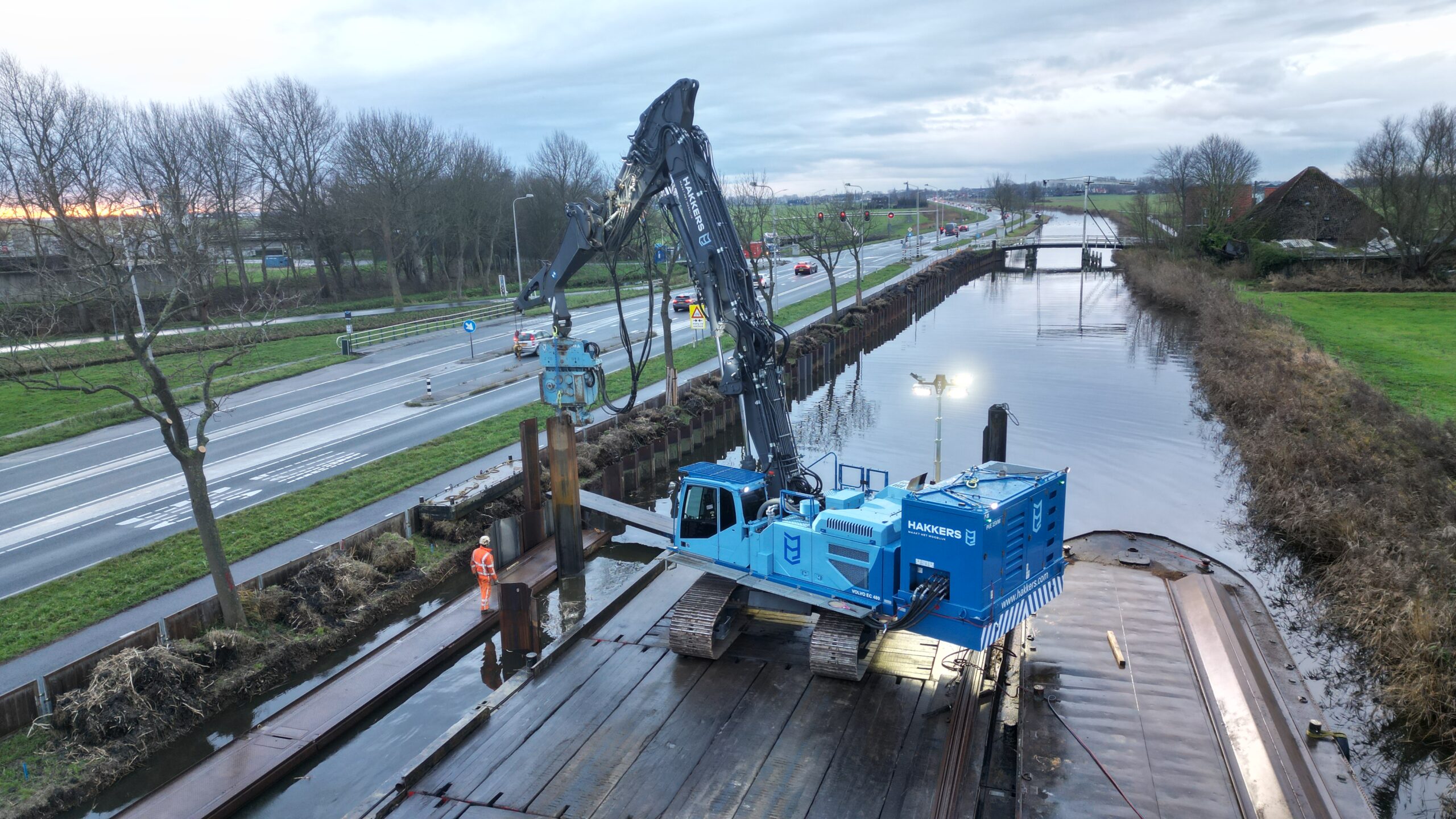
In recent years, the use of electric equipment has increased.
This allows the work to be carried out almost entirely emission-free.
We take that for granted by now, but for others, this is still very innovative.
“We can all be proud of that,” said Braakman.
Trust as the basis for innovation
Innovation requires space.
And space is only created when there is trust. In the Beens Groep – Hakkers construction team, it is all about that trust: improving, experimenting, and investing together. “A formal contract and process agreements are necessary, but collaboration is primarily about people,” says Jan Junte, Business Manager at Beens Groep.
In this construction team, it is all about trust and transparency. This allows us to experiment in testbeds, innovate in equipment, and invest in large quantities of reusable material.
That yields concrete results.
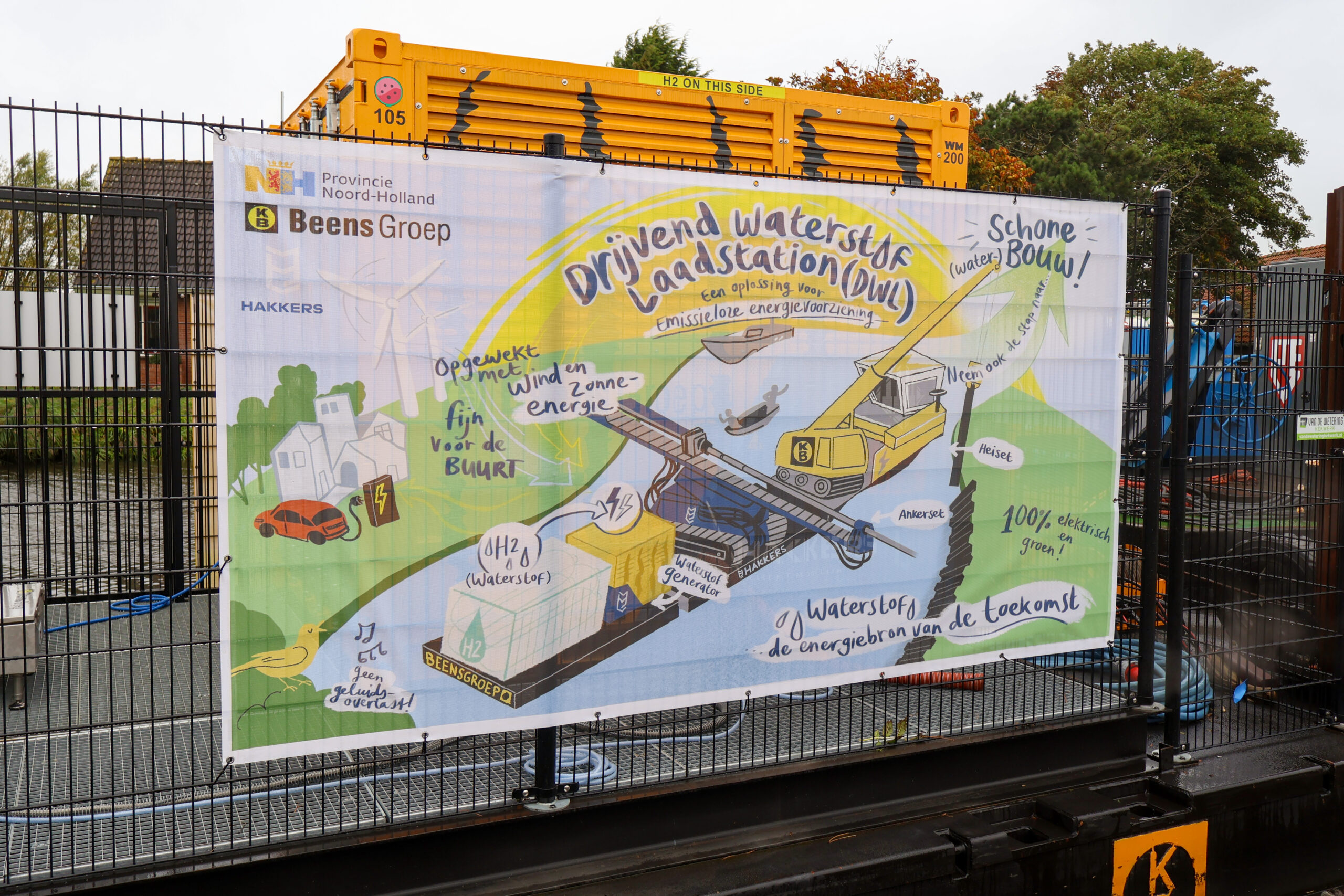
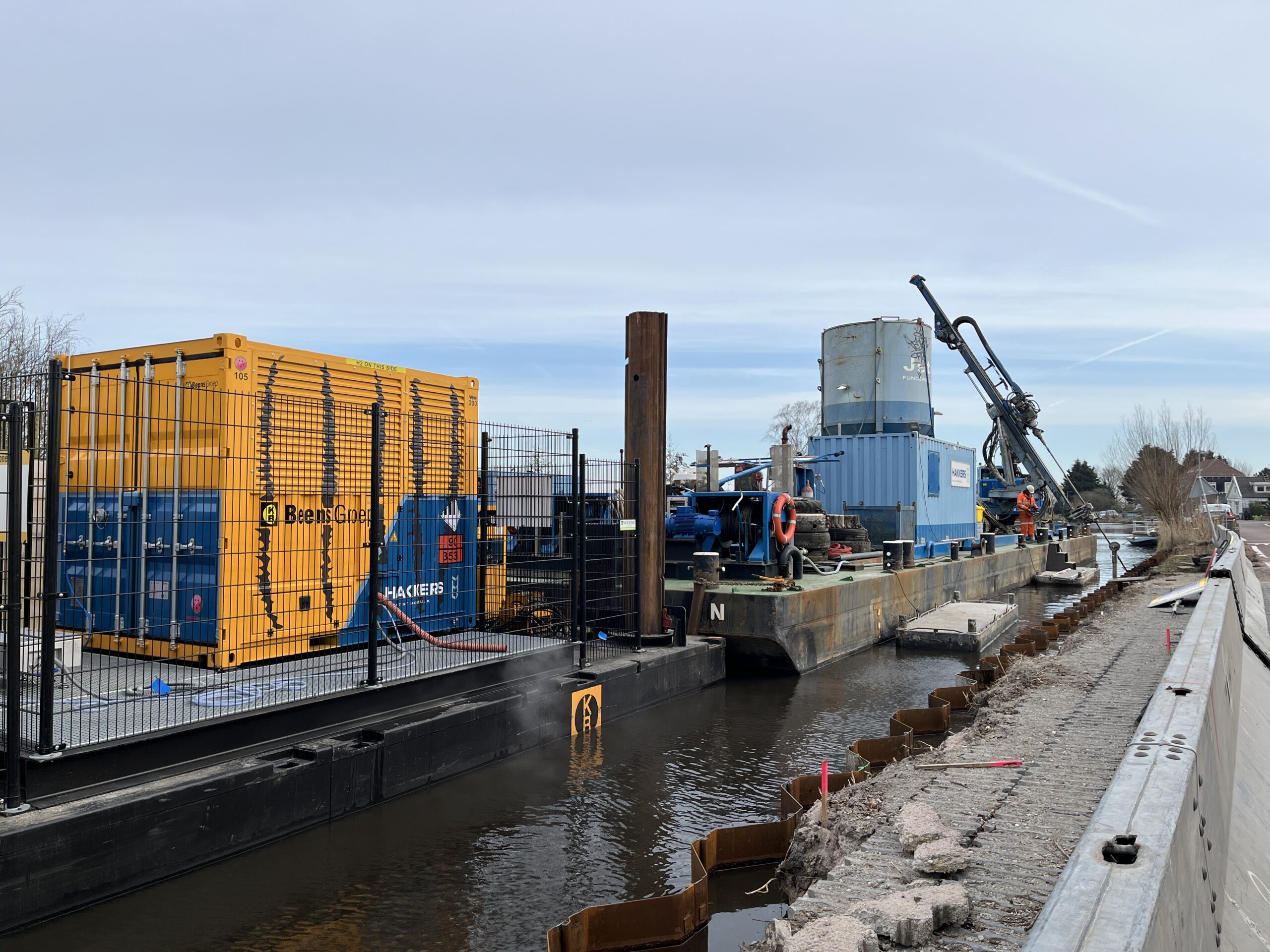
For example, since 2024, a floating hydrogen charging station has been charging electric equipment on-site, which means less transport, lower emissions, and greater efficiency.
Our guys on the shop floor no longer have to sail to a shore charging station every day.
That saves a lot of transport movements and time.
We work not only as emission-free as possible, but also as circularly as possible.
We give steel sheet piles from the Twente canals a second life and come up with creative uses for old wooden sheet piles.
Consider, for example, rubbing strakes, capping beams, and the shielding of sheltered areas.
We also have test gardens to increase biodiversity.
Experimentation and learning can be found at all levels of the collaboration: from the construction team to our colleagues on the shop floor.
In every project, we take new steps that benefit efficiency and sustainability.
“The courage to invest in innovation and sustainability is a major common denominator in the collaboration with the province and Hakkers,” Junte concludes proudly.
One team, one direction
The agreement with Beens Groep and the Province of North Holland cannot be compared to a traditional contract; this collaboration creates connection.
“We form a close-knit team with the province as the client, with an eye for each other’s long-term interests,” says Hein van Laar, Commercial Director at Hakkers.
That is how you build trust. And you need that trust to invest seriously in innovative solutions that do not pay for themselves in the short term, such as the development of a floating charging station with a hydrogen fuel cell.
Because the Beens Groep-Hakkers consortium is in charge of the design itself, sustainability and feasibility are incorporated directly from the drawing board.
“Together, we already make smart choices in the design phase,” Van Laar continues.
We record these in a partial agreement with a transparent quotation. As a result, there are hardly any deviations during the execution phase. With a fixed team, we safeguard acquired knowledge and experience, allowing us to work smarter and more efficiently project after project.
In addition, Van Laar emphasizes the strength of the Beens Groep-Hakkers combination.
We are both family businesses with a similar culture and the same expertise. As a result, we can scale up capacity effortlessly. In major projects such as the widening of the Twente Canals and major maintenance on national waterways – the so-called GOVa projects – we have jointly built up a wealth of experience working along canals. We can be proud of that, too.
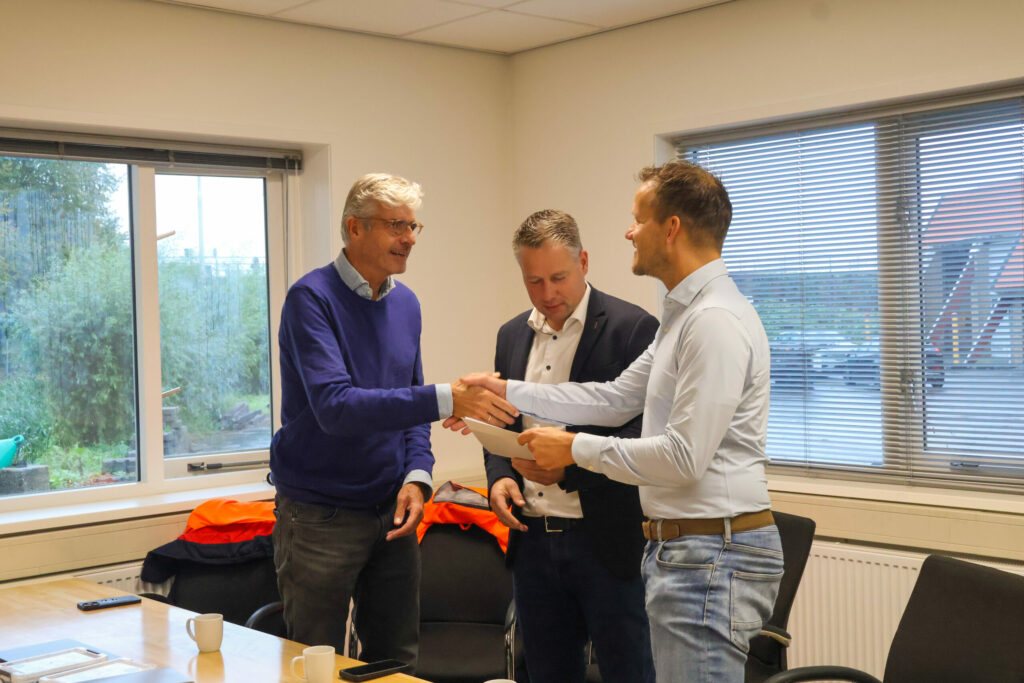
Together into the future
Ten bankside sections have now been successfully completed.
The sustainability goals have been exceeded, the collaboration has been extended, and trust is stronger than ever.
What this approach proves is that trust, courage, and the ability to learn are the driving force behind sustainable innovation.
At Hakkers, we believe that what is innovative today must be the norm tomorrow.
In this way, we are building not only safe and sustainable riverbanks, but also the future of our infrastructure.
Or, as Jeroen Braakman puts it beautifully: “What is normal for us still turns out to be innovative for others!”